
Why Juneteenth is Important Now More than Ever

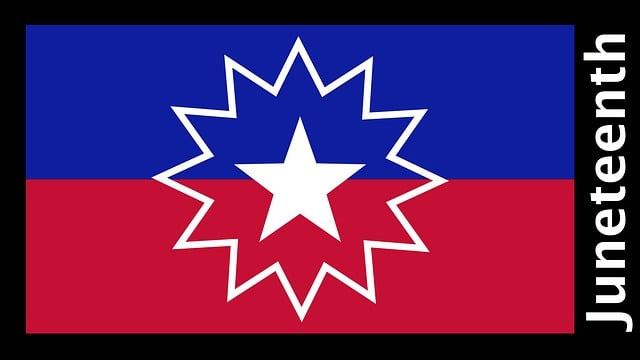
How many times have we heard quotations about the importance of learning our history? Historian Howard Zinn put it well: “If you don’t know history, it’s as if you were born yesterday. If you were born yesterday then any leader can tell you anything.” As our nation marks Juneteenth--the date that all enslaved African Americans were officially free in every state--the Trump administration is doing its best to erase history that it finds uncomfortable. It is essential that we know the significance of events like Juneteenth, therefore, in order to avoid the filtered version of history preferred by the current administration.
What is Juneteenth?
The Emancipation Proclamation legally freed all enslaved people in the Confederate States on January 1, 1863. In states that were still under Confederate control, however, enforcement of the Emancipation Proclamation was limited. Texas was the last to officially find out. On June 19, 1865, Union troops announced in Galveston Bay, Texas that enslaved people were free. General Gordon Granger read General Order No. 3, which began with:
“The people of Texas are informed that in accordance with a Proclamation from the Executive of the United States, all slaves are free. This involves an absolute equality of rights and rights of property between former masters and slaves, and the connection heretofore existing between them becomes that between employer and hired laborer.”
Emancipation did not happen all at once and was spotty even after General Granger read the proclamation. For example, some plantation owners waited until December--after the harvest--to inform their enslaved people that they were free. In Texas, June 19th became known as “Juneteenth” among the people who had been freed, and was marked with annual celebrations.
Juneteenth eventually became a federal holiday in 2021, to be observed on June 19th every year. President Joe Biden signed the legislation that had passed with bipartisan approval.
Then Donald Trump took the oath of office for his second term on January 20, 2025. The new administration soon took steps to dismantle historical exhibits and museum displays that focused on the horrors of slavery and racism. Trump even removed Juneteenth and Martin Luther King, Jr’s birthday from the list of federal holidays that offered free passes to national parks.
Executive Order Targeting Museums and National Parks
Trump’s campaign to erase certain details of American history got its jump-start on March 27, 2025, when Trump signed the Executive Order titled Restoring Truth and Sanity to American History. The administration had already declared war on “diversity, equity and inclusion” programs, or DEI. The March 27th EO, however, targets museums, historical sites, and national parks that Trump believed were promoting “divisive, race-centered,” “corrosive,” and “improper” ideologies that “degrade shared American values.”
Let’s look at some of the cultural institutions that have been singled out.
Philadelphia Independence Mall Exhibit
In 2010, the Freedom and Slavery in the Making of a New Nation exhibit was installed over the former site of the nation’s first executive mansion, where George Washington lived while he was President. The open-air exhibit includes interpretive plaques and a video depicting George Washington’s treatment of enslaved people.
In January of this year, Trump ordered the dismantling of the exhibit, and Park Service workers removed the plaques. The city of Philadelphia sued the Trump Administration, seeking to have the installation restored. Judge Cynthia Rufe of the US District Court for the Third Circuit issued a preliminary injunction in February, ordering the restoration of the exhibit while the lawsuit is in progress. In her 40-page ruling, Judge Rufe compared Trump’s actions to the authoritarian regime in George Orwell’s novel, 1984, stating that Trump does not have the authority “to dissemble and disassemble historical truths.”
As workers were installing the plaques that had been removed, the Trump Administration appealed. In April, the National Park Service updated its website with images of new panels that the Avenging the Ancestors Coalition--the group that advocated for the original exhibit--described as an attempt to sanitize history.
Today, the day before Juneteenth, a Third Circuit Court of Appeals panel ruled in favor of the Trump Administration, allowing changes to the exhibit to move forward. Reacting to the decision, Pennsylvania Governor Josh Shapiro stated in a post on X, “No matter how hard Donald Trump fights in a court of law to whitewash our history, he will never change our values in Pennsylvania. We are the birthplace of American democracy. We will continue to learn from our full history, even when it’s painful, to build a better future for all of us.”
Smithsonian Institution Exhibits and Museums
In August, 2025, Trump ordered an extensive review of Smithsonian Institution exhibits and museums. In an August 19, 2025 Truth Social post, Trump complained that “The Smithsonian is OUT OF CONTROL, where everything discussed is how horrible our Country is, how bad Slavery was.” The Trump Administration gave eight museums 120 days to replace exhibits deemed by Trump’s task force to contain “divisive or ideologically driven language.” Museums targeted by the order include the National Museum of American History, the National Museum of African American History and Culture, and the National Museum of the American Indian.
‘The Scourged Back’ Photograph
‘The Scourged Back’ is a well-known photograph that shows the heavily scarred back of a formerly enslaved Black man known as Peter (or Gordon, depending on the source). Trump’s campaign to remove “negative” depictions of American history led to the removal of the photograph from the Fort Pulaski National Monument in Georgia. The photograph was taken during a physical examination prior to enlistment and showed scars that likely resulted from floggings with a leather strap or paddling with a handsaw, according to a June 14, 1863 New York Times article.
A doctor and colonel noted at the time that they had seen many escaped enslaved people with similar scarring. The well-known image became a symbol of the horrors of slavery and was distributed by abolitionist groups.
History Matters
As we celebrate Juneteenth this year, the 250th anniversary of the signing of the Declaration of Independence is just around the corner. Noting that American Independence began “in the context of genocide, land theft, and slavery,” historian and author Jemar Tisby, PhD writes:
“This year, the 250th anniversary of the Declaration of Independence, the contrast between Juneteenth and the Fourth of July couldn’t be starker. Juneteenth represents liberation and America 250 under this regime represents bondage to a whitewashed past.”
We must be able to clearly see our history, with its flaws and tragedies as well as accomplishments and triumphs. In 2026, the attempted erasure of history threatens us all with a loss of access to a deep understanding of our history and ourselves. Shame on us if we let it happen.
Great essay.
:)